
Our Secondary Scholarship Students Take On Robotics and Tech Training
For Action in Africa’s Secondary Scholarship students, our Holiday Programs acts as an important part of their educational journey during school breaks. This program not only provides a safe space, but it extends learning beyond the classroom, allowing scholars to explore new interests, develop practical skills, and discover possibilities for their futures. By providing access to experiences that may otherwise be out of reach, our Holiday and Scholarship Programs support students in completing their education while also building the confidence and capabilities to shape their communities.
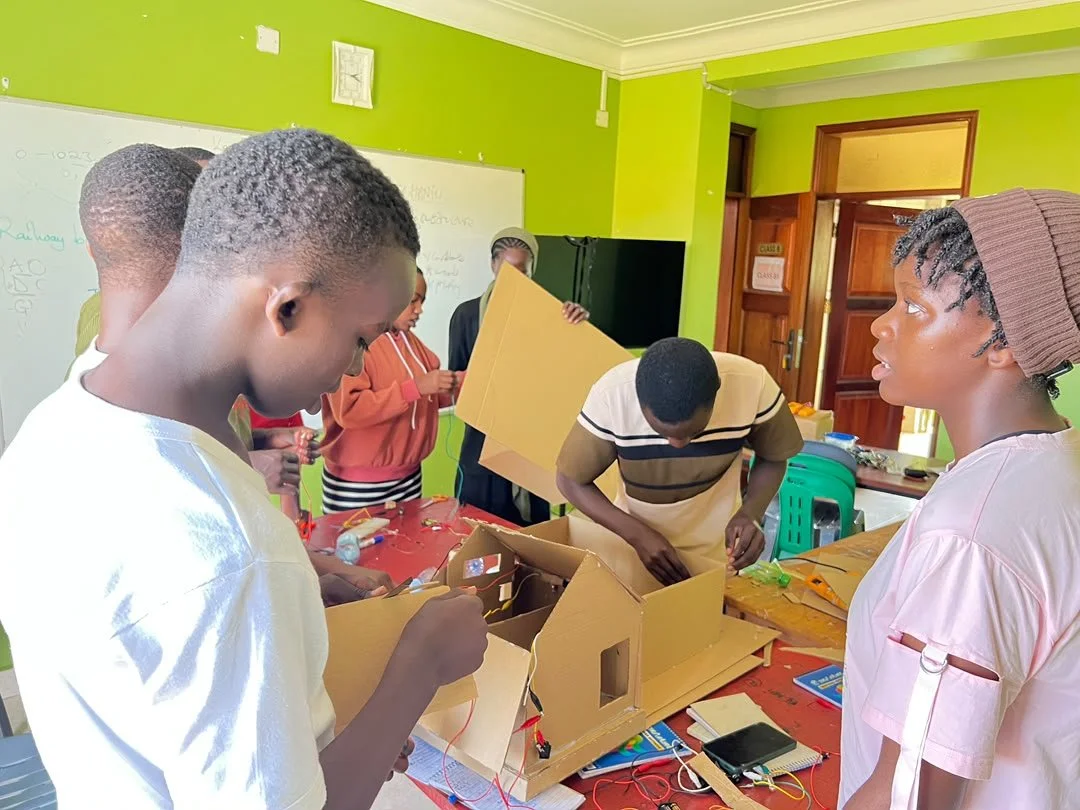
This September, 15 of our secondary scholars spent their school break learning about robotics, engineering, and technology at Fundi Bots in Komamboga. Over six days, they transformed raw components into working innovations, explored solutions to local challenges, and gained valuable experience in a rapidly evolving field.
Preparing Uganda’s Next Generation of Innovators
Uganda’s digital sector continues to expand. The Uganda Communications Commission’s 2024 report highlights significant growth in connectivity, including 45.7 million active mobile subscriptions, 17.0 million mobile internet users, 35.6 million mobile money accounts, and 19.0 million active smartphones. Social media adoption has also grown, with millions of Ugandans using platforms such as WhatsApp, TikTok, YouTube, Snapchat, Instagram, and X.
This growing demand for technological knowledge reinforces Action in Africa’s commitment to equipping young scholars with practical, future-ready skills.
Despite increased ICT adoption, Uganda continues to face challenges in developing locally designed technologies. Much of the technology used in the country is imported, creating opportunities for Ugandans to develop solutions that respond to local needs.
Fundi Bots addresses this opportunity by training Ugandans in robotics and engineering. Through hands-on learning, participants develop the skills to create innovations, solve community challenges, and explore ways to turn their technical knowledge into economic opportunities.
From the Classroom to Hands-On Innovation
While school holidays often provide a break from academic responsibilities, our scholars chose to spend their time exploring new ideas and developing practical skills.
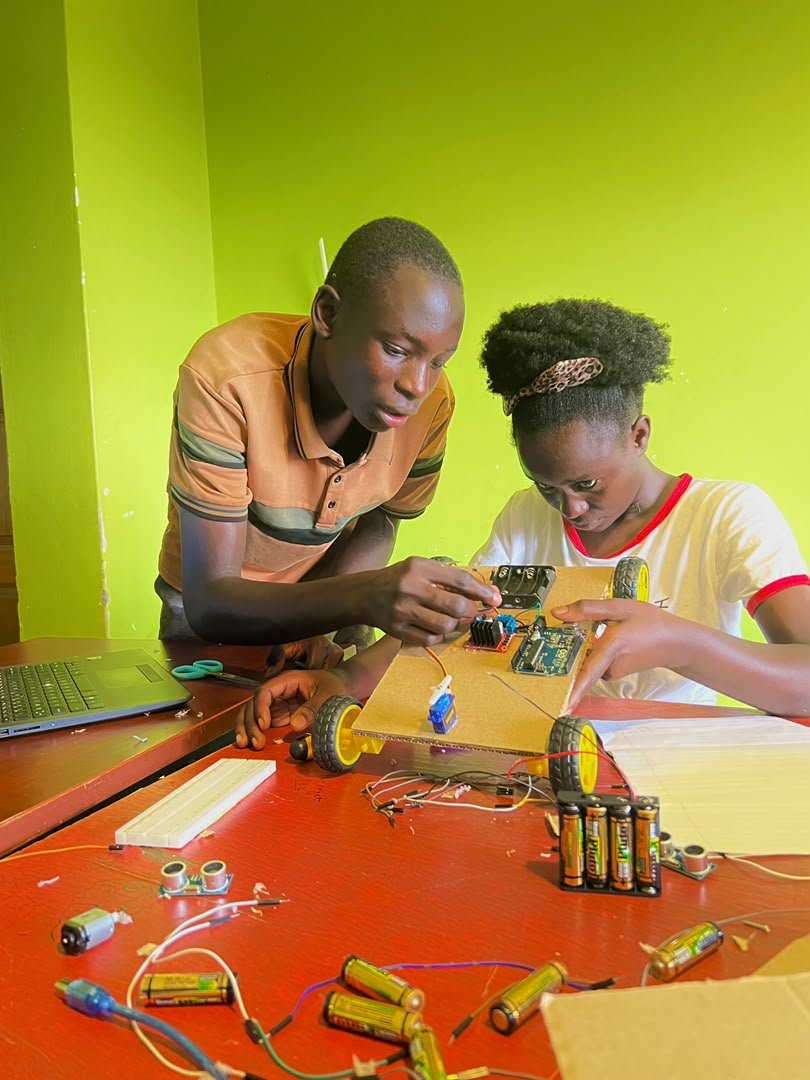
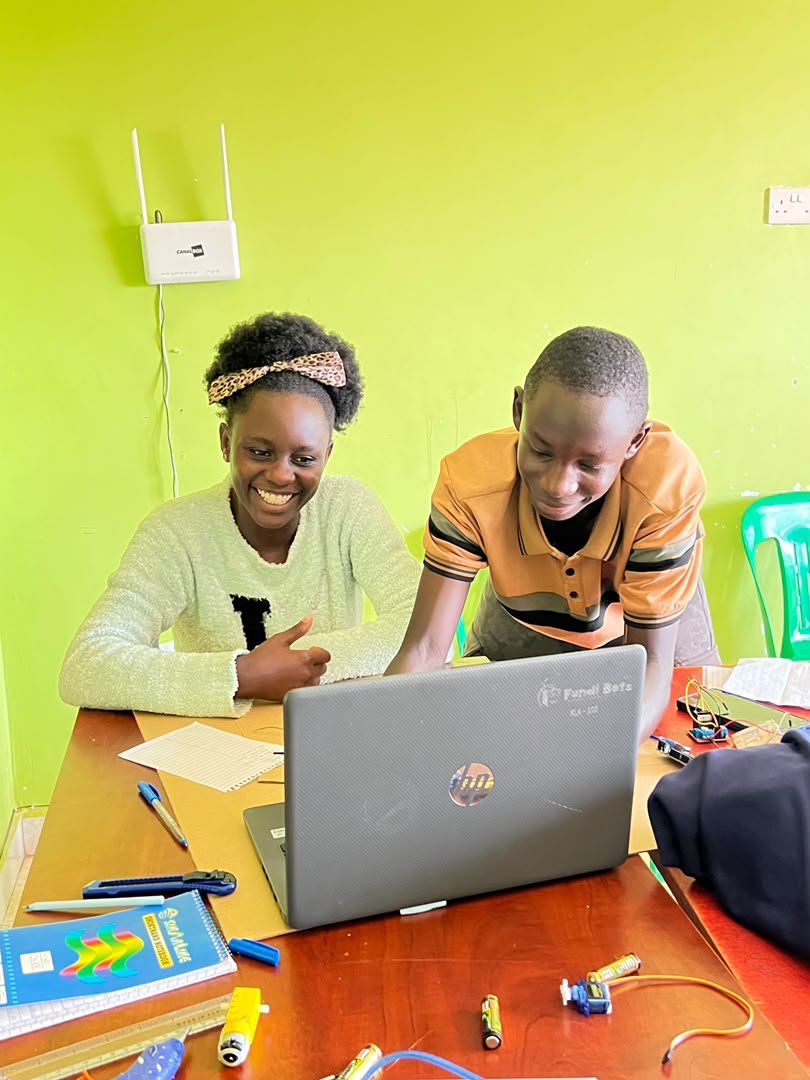
Rather than focusing solely on theory, the students engaged in hands-on projects involving building, coding, and engineering. Working together, they designed and developed solutions to challenges in agriculture, water conservation, transportation, public safety, and accessibility.
Their projects included:
Smart tomato harvester: Exploring ways to improve agricultural efficiency through automation.
Smart rainwater harvesting and irrigation system: Combining water conservation with technology to support more efficient water use.
Smart railway crossing barrier: Developing a system designed to enhance public safety.
Smart obstacle-avoidance rover: Building a robotic vehicle capable of navigating around obstacles.
Automated smart dustbin: Exploring technology-based approaches to cleaner communities.
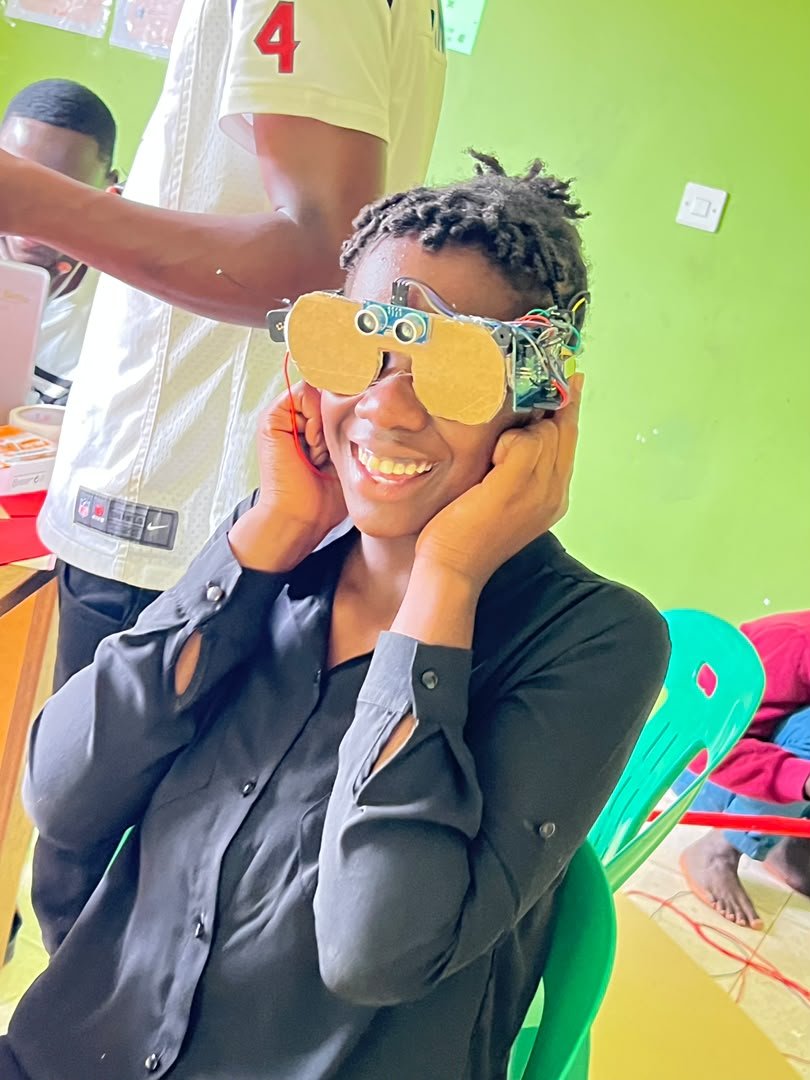
Smart glasses and walking sticks: Developing sensory-equipped tools to support safer mobility for people with visual impairments.
Seeing our scholars transform individual components into working systems over the course of six days was inspiring. Experiences like this demonstrate the value of providing young people with access to practical training, mentorship, and opportunities to explore their potential.
Breaking Barriers Through Technology
For many students, programs like this offer more than technical training. They create opportunities to challenge assumptions about who can participate in science, technology, engineering, and mathematics.
Nakidde Winfred, 15-years-old, a Senior Three student at Riverside High School, reflected on the experience:
“As a young woman, contributing to community solutions was deeply inspiring. The program successfully challenged traditional gender stereotypes, demonstrating that technical and hands-on projects are for everyone, not just men.”
Her experience highlights the importance of creating learning environments where girls and boys alike can explore technical fields, build confidence, and see themselves as innovators.
For Mugisha Mitchel, an Senior Two student, the training also sparked excitement about sharing what he learned with others.
“I am so grateful to Action in Africa for sending me to this training. I am now an expert in inventing problem-solving robots. I plan to share everything I learned with my schoolmates who couldn’t attend. I know I will feel like a superstar! Imagine building a tomato harvester robot or smart glasses for visually impaired people. Just think how famous that can make you at school!”
Mugisha’s enthusiasm reflects the ripple effect of these opportunities. When students gain new skills, they can share their knowledge with classmates, inspire their peers, and help expand access to learning within their schools and communities.
Help Us Expand Opportunities for Innovation
We are incredibly proud of these 15 scholars for choosing to spend their holiday developing new skills, exploring technology, and imagining solutions for a brighter future in Uganda. But this is just the beginning.
Countless other students in our scholarship program are eager to learn how to code, build robots, and design solutions for their communities. With continued support, we can provide more scholars with access to technology workshops, hands-on learning, and expert mentorship.